
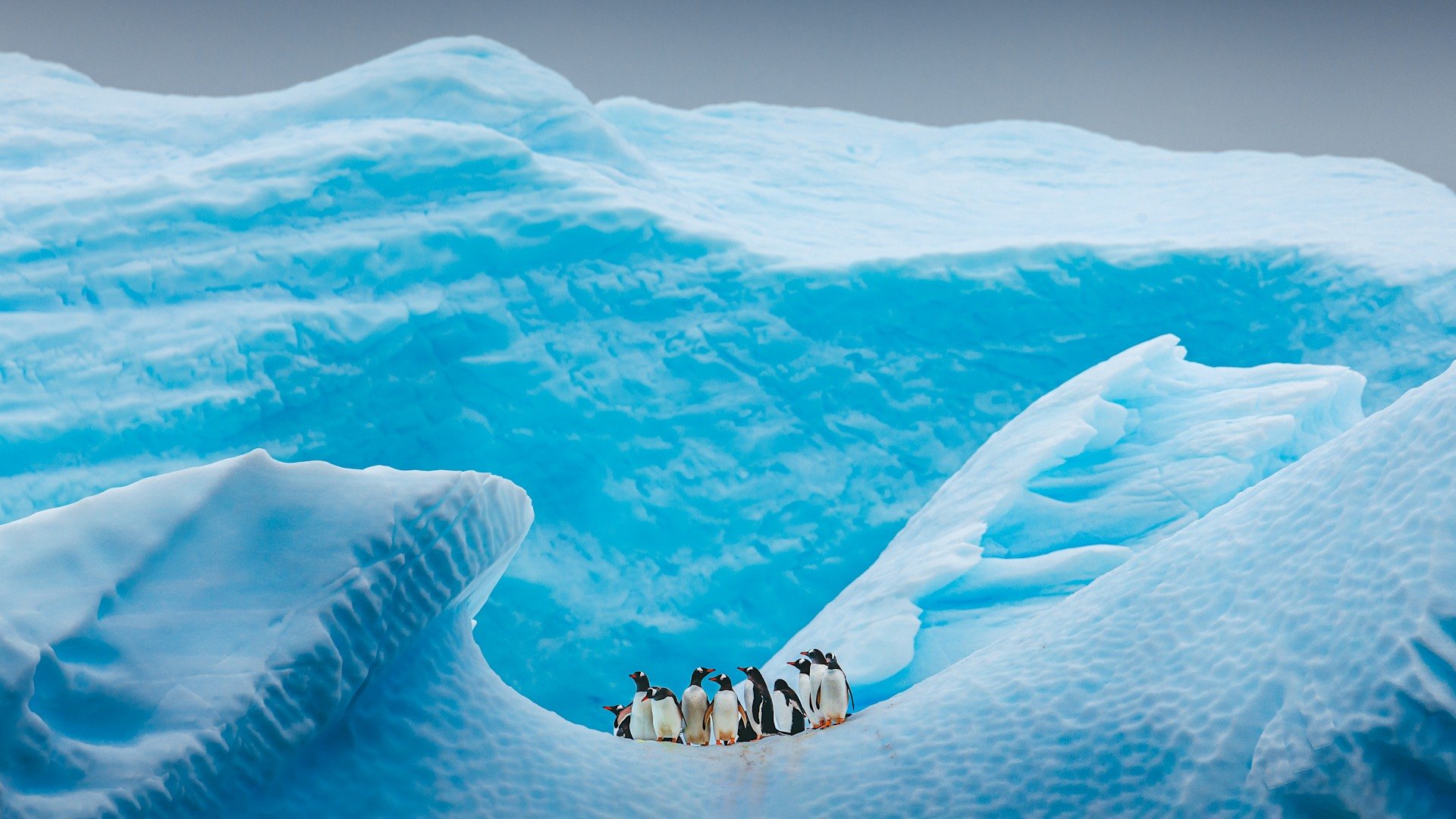
ANTARCTICA
Earth's southernmost continent -The ultimate edge of the world. Antarctica is for the bold and the curious. Ice-blue horizons, penguins, silence, and scale unlike anywhere else on Earth, a journey that redefines adventure.


Antarctica is the world’s last great wilderness — a vast and otherworldly continent where towering glaciers, sculpted icebergs, snow-covered mountains, and extraordinary wildlife come together to create one of the most remote and unforgettable travel experiences on Earth.
At the heart of Antarctica’s appeal is the sheer scale and beauty of its landscapes. Enormous glaciers tumble from mountains into icy seas, cathedral-like icebergs drift through deep blue channels, and vast expanses of untouched snow stretch towards the horizon. With almost no permanent human presence, Antarctica offers a rare opportunity to experience a landscape that still feels entirely wild.
Most journeys explore the Antarctic Peninsula, where dramatic mountain ranges meet sheltered bays and narrow waterways. Days are spent cruising between islands and ice formations, heading ashore by Zodiac and exploring landscapes that few people will ever have the opportunity to see. Depending on the expedition, activities can include kayaking, hiking, snowshoeing, and even camping overnight on the ice.
Wildlife is one of Antarctica’s greatest spectacles. Vast colonies of gentoo, chinstrap, and Adélie penguins gather along the coastline, while humpback and minke whales move through the surrounding waters. Leopard, Weddell, and crabeater seals can be seen resting on the ice, alongside an incredible variety of seabirds. During the height of summer, the continent comes alive with breeding colonies, penguin chicks, and feeding whales.
Beyond the Peninsula, the South Shetland Islands offer volcanic landscapes and thriving penguin colonies, while longer expeditions may cross the Antarctic Circle or combine Antarctica with South Georgia and the Falkland Islands, home to some of the richest wildlife environments in the Southern Ocean.
The journey itself is part of the adventure. Most expeditions depart from Ushuaia in southern Argentina, crossing the legendary Drake Passage before reaching the Antarctic Peninsula. Selected fly-cruise expeditions offer an alternative, allowing travellers to fly across the Drake and join their vessel closer to the continent.
What makes Antarctica truly special is its profound sense of perspective. There are no cities or roads, only immense landscapes shaped by ice, ocean, and weather. Travel is carefully managed to protect this fragile environment, with responsible expedition operators following strict guidelines around wildlife encounters, landings, and biosecurity to preserve one of the planet’s most pristine ecosystems.
The best time to visit Antarctica is during the austral summer from November to March, when temperatures are milder, sea ice retreats, and wildlife activity is at its peak. Early summer brings pristine snow and penguin courtship, while later in the season offers penguin chicks and increasingly active whales.